I’ve heard some of the most common myths about pet food out there. From kibble to canned, there are plenty of crazy stories that circulate. Over the years, the pet industry has grown and adapted – much like the human food industry – and with that change has come difficulty in knowing what is and isn’t true. In this post, I hope to shed some light on some of these common misconceptions about your pet’s diet.
#1: Kibble Is Good for Their Teeth
This is probably the one I hear most often when talking about a pet’s diet. Many of us were told that kibble, or dry food, is beneficial to your pet’s dental health. This is because when your pet chews kibble (or anything for that matter) there is an abrasive action that happens.
Imagine this: you don’t have a dental regimen. No brushing, flossing, or even mouthwash. All you do for your teeth is eat dry cereal for two or three meals a day. I don’t know about you, but I’ve eaten dry cereal and the one thing my teeth do not feel – is clean! Actually, the likelihood that you would have food deposited and built-up in your teeth and gums is higher when moisture isn’t present.
One of the most beneficial things that you can do for your pet’s dental health is add moisture. In fact, the systems of yours and your pet’s bodies work so much better when water is present! It is especially important for your pet’s dental health because dental health is directly related to cardiovascular health, and no one wants their pet to have heart disease.
So the myth that kibble is beneficial for your pet’s dental health is simply not true. That’s not to say that kibble is inherently bad (we’ll discuss that in another post), just that your kibble should not be a standalone dental regimen for your four-legged.
#2: Canned Food Doesn’t Have Enough Vitamins
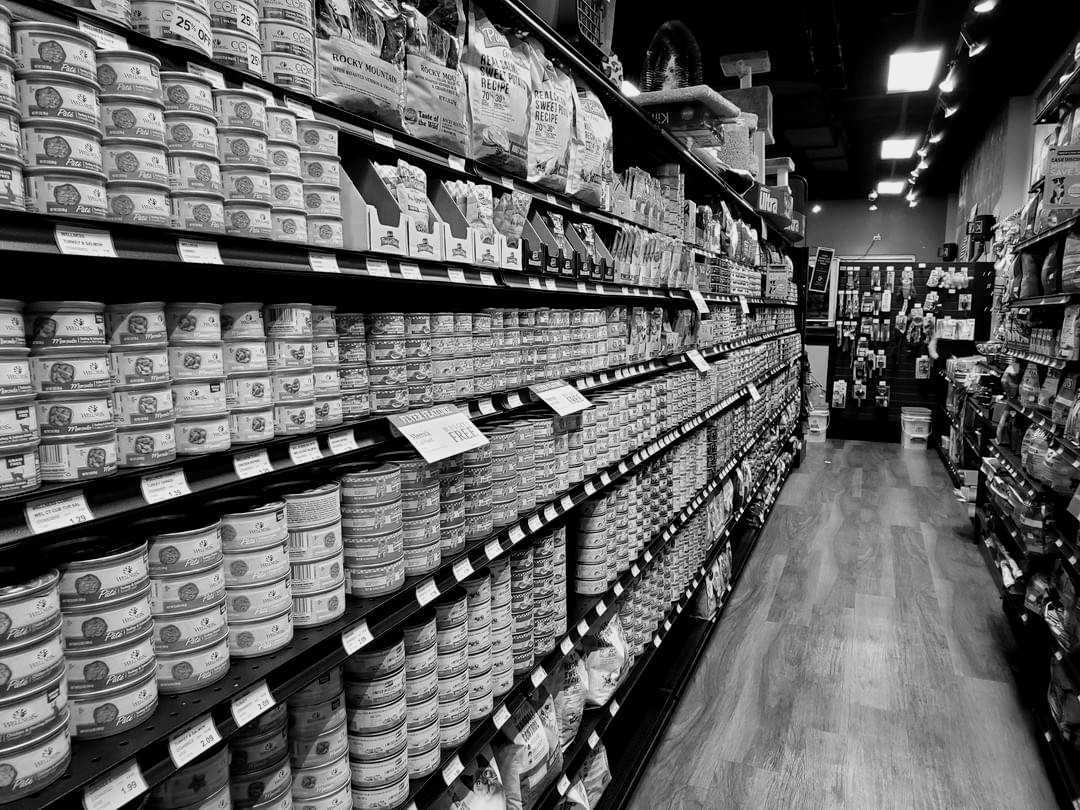
This one can be tricky. Mainly because “canned food” is a very loose term for many different ways of feeding your beloved pet. Canned food that is marked as a full and balanced diet is (you guessed it) a full and balanced diet. If you go to a pet store and look at its selection of canned products, this is the majority of what you will see.
Where people usually get frustrated is when a company has food “toppers” or “complements” which are pouches or cans that are mostly meat-protein and gravy. These are for picky, old, or underweight pets who don’t want to eat the food they are supposed to eat.
The key for this myth is to read your labels! If you want to feed solely canned foods to your pooch, pay close attention to the product you’re buying and make sure that label says it is a “complete and balanced meal.” If you look at the panel on the back of the can or pouch, you will see something like “this product is made to meet the nutritional levels established by AAFCO profiles for maintenance.” If it is not a meal and does not contain the right amount of vitamins and minerals, it will say “this product is intended for intermittent or supplemental feeding only.”
#3: Grain-Free Food Causes Heart Disease
This one has given the pet food industry grief for a few years now. It is, however, not true!
Back in 2018, the FDA came out with a statement saying that grain-free foods were killing dogs because they may cause heart disease. This sent the entire industry into a panic and caused many manufacturers to pull new product, cancel potential products, and reframe their entire marketing strategy. The claim was that the presence of legumes in these types of foods were absorbing a key amino acid – taurine – in the animals’ bodies which left less to be absorbed and used by the heart. Physiologically, that makes perfect sense. If a grain-free food does not add supplemental taurine, the taurine that is present in the meat used by the manufacturer is not enough for the dog to metabolize if legumes are absorbing it as well.
However, the claim was that it led to the heart disease “Dilated Cardiomyopathy,” or DCM, which happens to be a congenital defect in which an enlarged heart weakens and cannot pump blood to the rest of the body. This disease is commonly found in certain breeds of deep-chested dogs, like Greyhounds, Whippets, Cocker Spaniels, etc.
This statement was paired with a comment that the FDA had not actually completed any studies yet, but simply that they were preparing to do so. When they finally finished the studies in the fall of 2020, it turned out that heart disease in house pets does not have a direct connection to feeding grain-free foods.
If you have a dog with an enlarged heart, while I wouldn’t recommend against feeding grain-free foods, I would recommend that you make sure that any food you feed (whether including or excluding grains!) has added taurine. It is vital that any dog with a heart condition has as much help as they can get.
 The Kit and Cavoodle Pet Center
Leave a comment